Navi Took Its First Outside Capital Before an IPO. Why Sachin Bansal Waited
Table of Contents
Navi Took Its First Outside Capital Before an IPO. Why Sachin Bansal Waited
For seven years, Sachin Bansal did what most founders cannot afford to do: he funded his own financial services company. After selling his Flipkart stake, Bansal injected hundreds of millions of dollars into Navi, ensuring he retained full ownership and control without having to answer to outside venture capital.
But on 19 August 2026, Navi announced a proposed $100 million investment from Prosus, a large global technology investor. It marks Navi's first outside equity capital. Why would a famously bootstrapped founder finally take outside money, especially just ahead of a planned IPO? The answer lies in the unique capital requirements of a lending business and the realities of the public markets.
What the cheque buys
The Prosus investment values Navi at roughly $1.3 billion. While the company has not disclosed the exact stake, the math is straightforward.
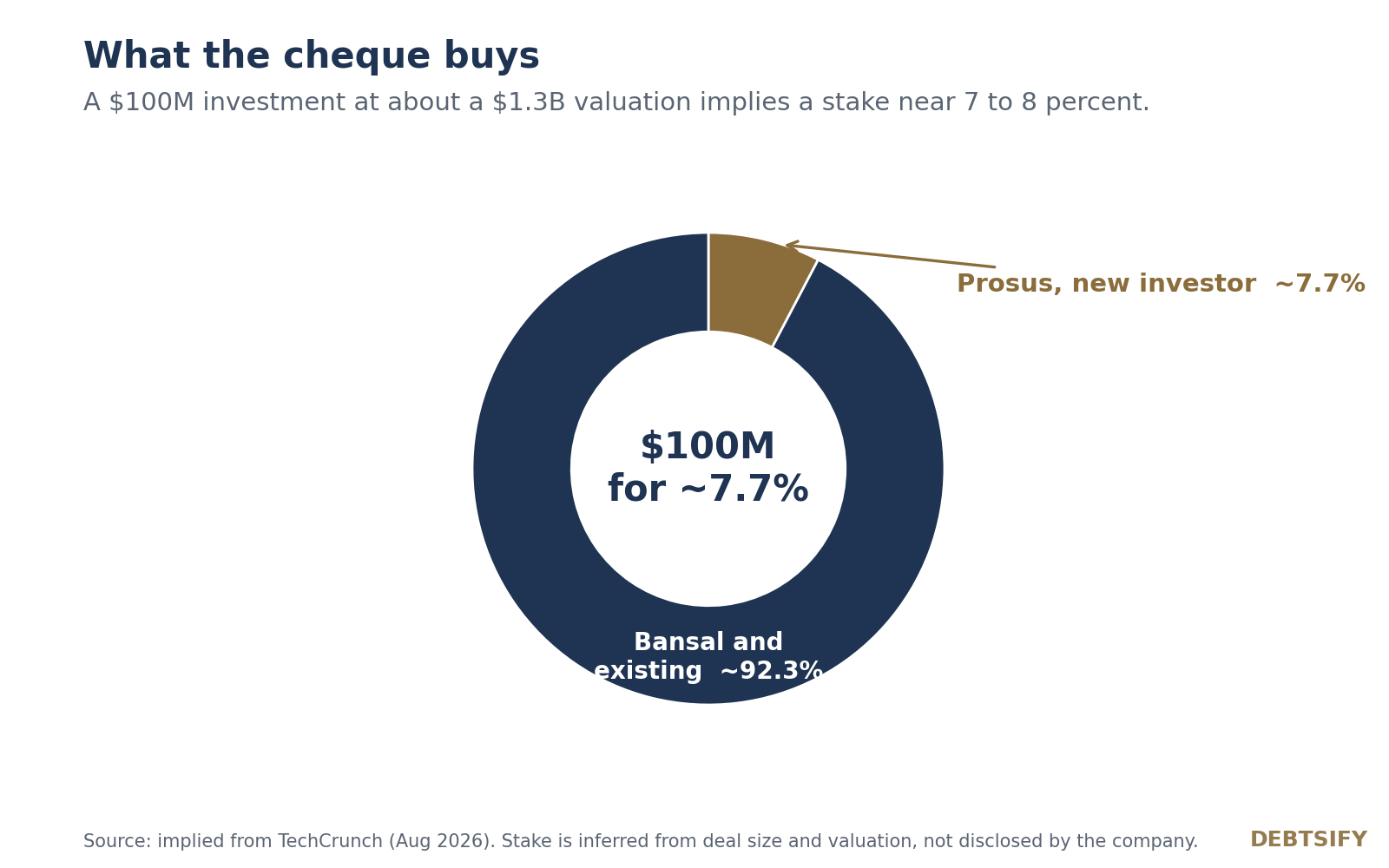
Figure 1. A $100M investment at about a $1.3B valuation implies a stake near 7 to 8 percent.
Selling roughly 7.7% of the company for $100 million leaves Bansal and existing stakeholders with the vast majority of the business. It is a relatively small dilution for a significant cash injection, but it also establishes an external, institutional price on the company ahead of its IPO attempt.
A lower mark than it once wanted
That institutional price, however, is not the peak valuation Navi once envisioned. Taking outside capital meant accepting a mark below what the company had sought in previous years.
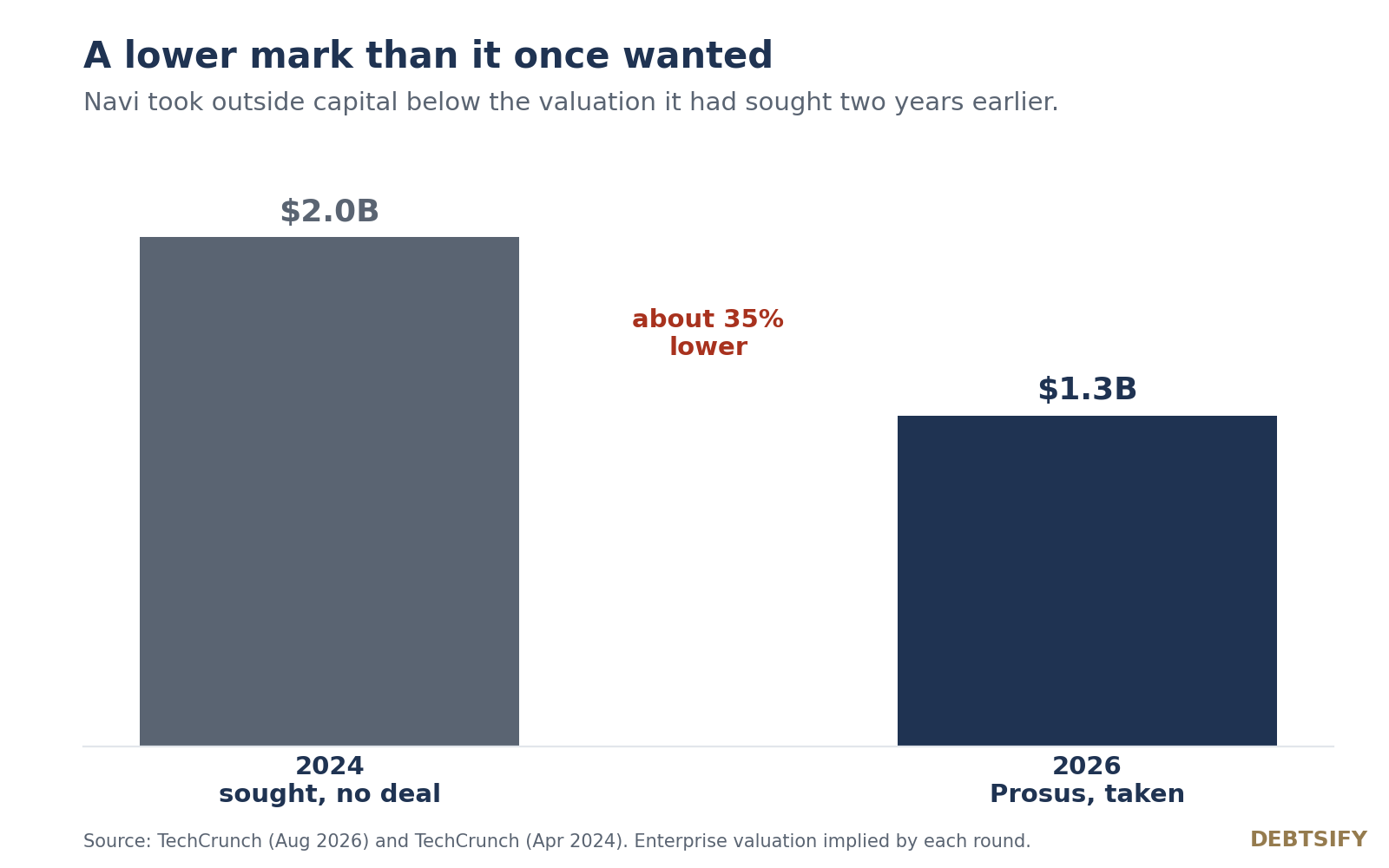
Figure 2. Navi took outside capital below the valuation it had sought two years earlier.
In 2024, reports suggested Navi was seeking a valuation around $2.0 billion, but no deal materialized. Two years later, the $1.3 billion valuation accepted from Prosus represents a roughly 35% lower mark. Accepting a lower valuation from a tier-one investor like Prosus provides essential validation as the company prepares to file for an IPO to raise a reported ₹3,000 crore.
The engine cooled
The decision to bring in Prosus at this valuation also comes against the backdrop of Navi's recent financial performance. While the lending arm, Navi Finserv, remains profitable, its bottom line has seen a sharp contraction.
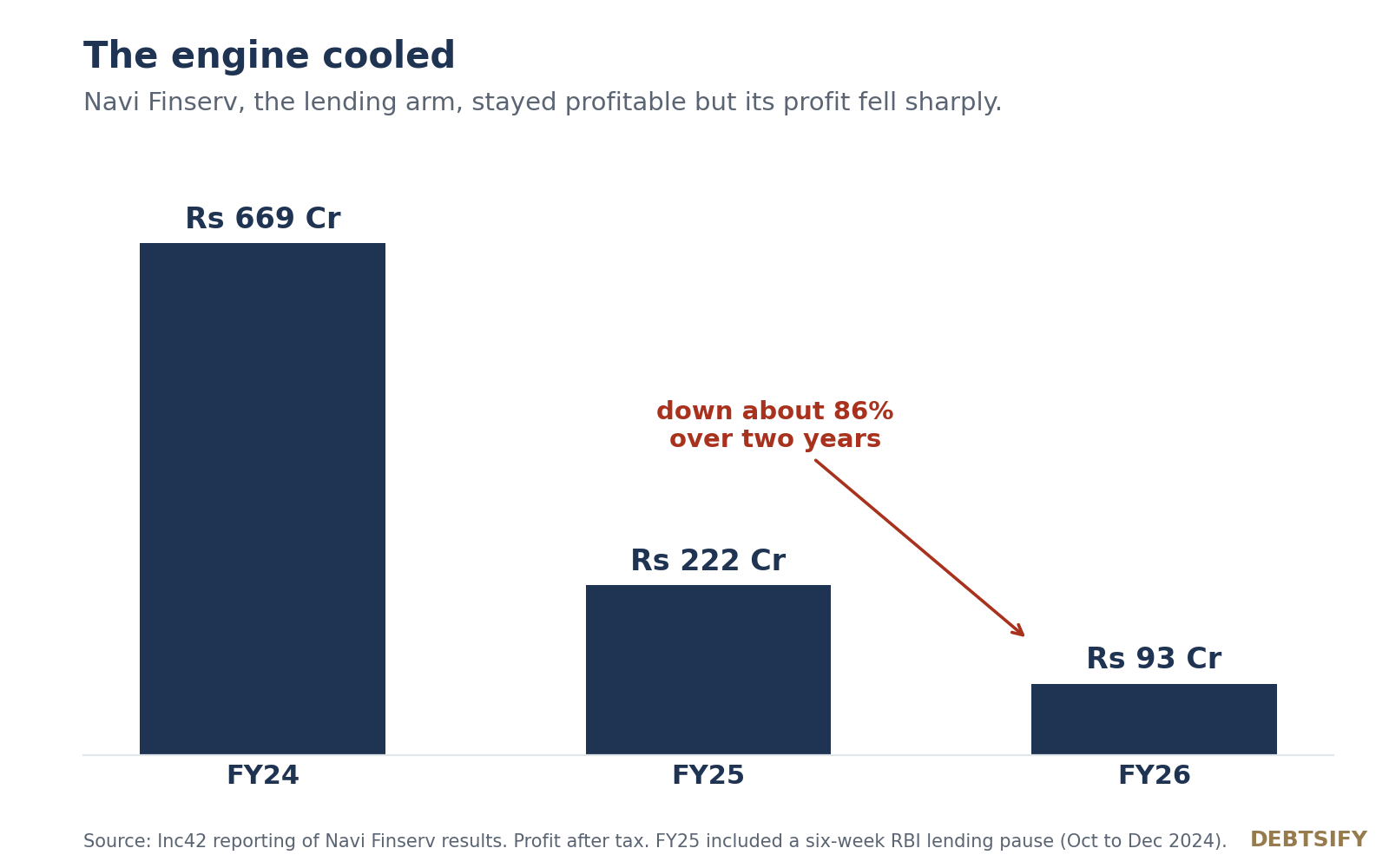
Figure 3. Navi Finserv, the lending arm, stayed profitable but its profit fell sharply.
Profit after tax fell from ₹669 crore in FY24 to ₹222 crore in FY25, and down further to ₹93 crore in FY26—a decline of about 86% over two years. FY25 notably included a six-week RBI lending pause (October to December 2024), which impacted operations. As the engine cooled, having a strong external backer and additional capital became a strategic priority to restart growth and satisfy regulators ahead of a public listing.
Why a lender is the one business that needs equity
For most operating companies, debt is a way to avoid dilution. But for an NBFC (Non-Banking Financial Company) like Navi, the rules are different. Regulation ties lending capacity directly to capital. A licensed NBFC can only lend a multiple of the equity it holds.
Debt and deposits fund the loan book, but they sit on top of an equity base. Past a certain point, the only way to lend more money is to add more equity. Growing a loan book therefore strictly requires outside equity. Bansal self-funded this equity base for years, but as the book grows and an IPO approaches, institutional equity capital becomes a regulatory and operational necessity.
Frequently asked questions
How much did Navi raise, and from whom? Navi announced a proposed $100 million investment from Prosus, a large global technology investor, on 19 August 2026. It is Navi's first outside equity capital and remains subject to customary closing conditions and regulatory approvals. The investment values Navi at about $1.3 billion, implying a stake of roughly 7 to 8 percent.
Why did Sachin Bansal wait so long to raise outside money? Because he did not have to raise it. After selling his Flipkart stake, Bansal funded Navi himself, starting with about Rs 888 crore in 2019 and adding hundreds of millions of dollars over the years. That let him keep full ownership and control. He took outside capital only when a growing lending book and a coming IPO made it necessary.
Why does a lender need equity rather than just debt? Because regulation ties lending capacity to capital. A licensed non-banking financial company can only lend a multiple of the equity it holds. Debt and deposits fund the book, but they sit on top of an equity base, and past a point the only way to lend more is to add more equity. Growing a loan book therefore requires outside equity.
Is this Navi's first attempt at an IPO? No. It is the third. Navi filed for an IPO in 2022 and received the regulator's approval, then abandoned the listing in 2023. It is now preparing to file again, reportedly for a raise near Rs 3,000 crore. The Prosus investment puts an outside institutional price on the company ahead of that attempt.
Would Debtsify fund a company like Navi? No, and the distinction is the point. Navi is a licensed NBFC that needs equity to capitalise its own loan book. Debtsify is not a bank, not an NBFC and not the lender. It arranges non-dilutive structured credit for operating companies with revenue and a specific, repayable need, not for lenders capitalising a book. Different problem, different instrument.
About Debtsify
Debtsify is a private structured-credit and bridge-financing partner for high-growth Indian companies. It arranges ₹5 Cr to ₹100 Cr in 48 to 72 hours, 100% non-dilutive, with no equity, warrants, board seats, or collateral. It is not a bank, an NBFC-marketplace, or a loan aggregator. It is a capital partner.
This article is for information only. It is not investment, legal or financial advice, and it is not an offer of any facility. Figures are drawn from press reporting and should be verified against primary filings before any decision. Valuations, rates and outcomes change.
Ready to explore structured funding options?
Connect with Debtsify today to discover how custom venture debt and non-dilutive bridge capital can fuel your growth without equity dilution.